
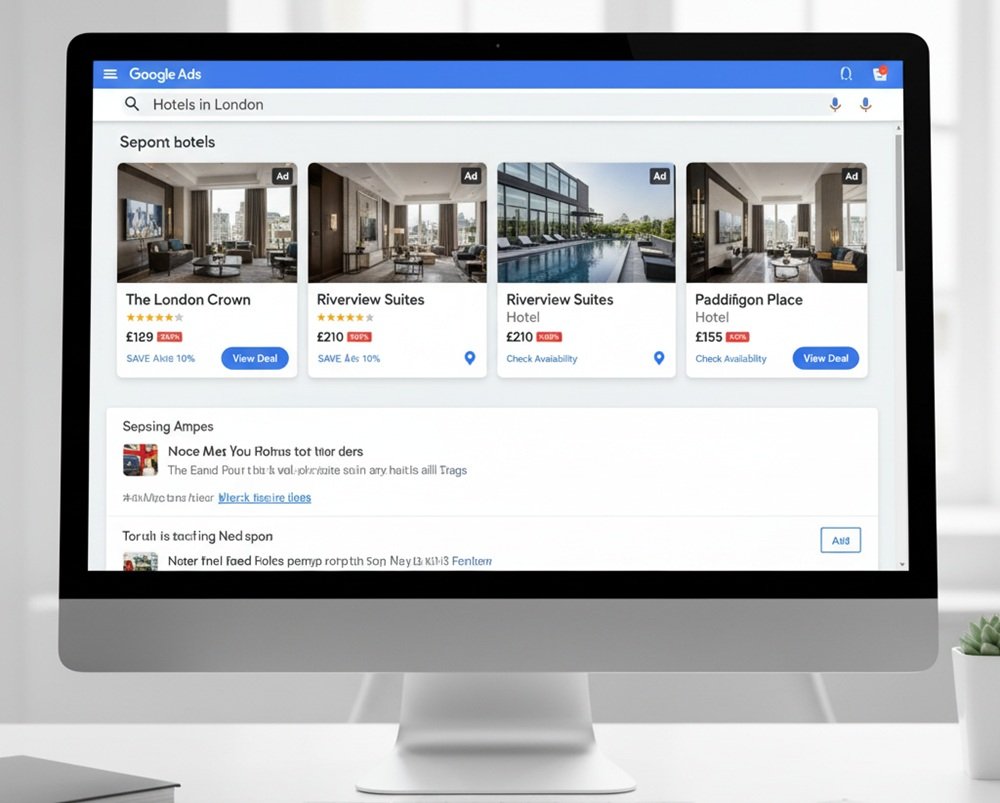
Planning Google Ads for hotels?
Before travelers click “Book Now”, they tend to search not just on booking platforms, but on Google. It can be “hotels near Galle” or “best places to stay in Rome”. The journey often begins with a search bar where your opportunity knocks.
Many hotels still lean heavily on Online Travel Agencies. They offer visibility while siphoning off hefty commissions. With a well-crafted Google Ads strategy, you can bypass middlemen, boost direct bookings, and take full ownership of brand narratives.
What Are Google Ads?
It’s Google’s proprietary paid advertising platform. Businesses can display targeted ads across Google’s vast ecosystem (Search, Maps, YouTube, and partner sites). For hotels, you can appear exactly where travelers are searching for accommodations, attractions, or travel tips.
Types of Google Ads Relevant to Hotels
- Search Ads: Text-based ads that appear at the top of Google Search results with queries like “hotels near [city]” or “best resorts in Bali”. You can target high-intent travelers actively searching for stays.
- Display Ads: Visual ads (images or banners) shown across Google’s Display Network (travel blogs, news sites, and apps). You can build brand awareness while retargeting past visitors.
- Video Ads: Ads shown on YouTube, often before or during travel-related content. It’s great for seamless storytelling, showcasing hotel experiences, or promoting seasonal offers.
- Performance Max: AI-powered campaigns that run across all Google channels, optimized for conversions using machine learning. You can maximize reach and ROI with minimal manual setup.
- Hotel Ads: Specialized ads in Google’s hotel booking module on Search and Maps with real-time prices, photos, and links. Direct competition with OTAs drives bookings from Google’s interface.
Why Use Google Ads for the Hotel Industry?
Over 65% of travelers begin their planning with Google, looking for destinations, accommodations, or travel tips. It makes Google the most influential digital touchpoint in the travel funnel.
- Reach High-Intent Travelers: Google Ads allow hotels to appear in front of users who are actively searching for stays. For example, someone searching “luxury hotels in Santorini” is likely ready to book.
- Compete Directly with OTAs: OTAs dominate search results with aggressive bidding and SEO. Google Ads gives hotels a chance to reclaim visibility and reduce dependency on commission-heavy platforms.
- Boost Visibility for Branded and Non-Branded Searches: Whether it’s “Hotel []” or “best hotels near [city]”, ads ensure your property shows up prominently, even if your organic SEO isn’t strong.
- Control Pricing, Promotions, and Messaging: Unlike OTAs, Google Ads let you showcase exclusive offers, loyalty perks, or seasonal discounts directly to make you stand out and convert more effectively.
- Global Reach, Local Precision: Google Hotel Ads are available in every major language and currency. No wonder hotels can target specific travelers by demographics, geography, device, and itinerary.
20–30% increase in direct bookings when shifting budget from OTAs to Google Ads. Higher ROI from Performance Max campaigns due to AI-driven optimization.
Setting Up a Google Ads Campaign for Hotels: A Step-by-Step Guide
Launching a successful campaign for your hotel can deliver precision, persuasion, and performance. The right setup drives direct bookings, reduces OTA dependency, and elevates your brand.
Step #01: Define Your Objective
Common objectives include –
Direct Bookings: Drive traffic to your booking engine and reduce OTA commissions.
Brand Awareness: Introduce your hotel to new audiences, especially in competitive markets.
Seasonal Promotions: Highlight offers like “Summer Escape Packages” or “Winter Wellness Retreats.”
Re-engage Past Visitors: Retarget users who visited your site but didn’t complete a booking.
Set measurable goals like –
CPA (Cost Per Acquisition): How much you spend to get one booking.
ROAS (Return on Ad Spend): Revenue generated per dollar spent.
Conversion Rate: Percentage of ad clicks that result in bookings.
Step #02: Research Keywords for Hotel Ads
Focus on high-intent, location-based Keywords like –
- “Hotel in [area] [city]”
- “Family-friendly resort near Sentosa Island”
- “Luxury hotel with spa in [road]”
Use Google Keyword Planner to –
- Analyze search volume, competition, and suggested bid.
- Identify seasonal trends (“beach resorts in December” spikes in Q4).
Segment keywords by traveler intent, like –
Awareness: “Top hotels in Istanbul” for broad targeting + brand exposure.
Consideration: “4-star hotels near Eiffel Tower” for mid-funnel + comparison-based.
Decision: “Book Hotel Riviera Paris online” for high-conversion + direct booking intent.
74% of travelers plan their trips online, and 90% switch between devices during the process. It makes keyword precision and mobile optimization essential.
Write Compelling Ad Copy
Highlight Unique Selling Points (USPs) like –
- “Ocean-view suites with private balcony”
- “Complimentary breakfast & airport shuttle”
- “Pet-friendly rooms with garden access”
Use urgency and/or promotions like –
- “20% off early bookings — ends Sunday!”
- “Only three rooms left for New Year’s Eve!”
Always include a Clear Call-to-Action (CTA) –
- “Book Direct for the Best Price”
- “Reserve Your Stay Today”
- “Check Availability Now”
Step #04: Create Dedicated Landing Pages
Sending users to your homepage is a missed opportunity. Instead, build targeted landing pages that match the ad’s promise. Key elements of a high-converting hotel landing page include –
- Relevant Content: Match the ad’s theme (spa packages, family suites).
- Visual Appeal: Include high-quality images, virtual tours, and ambiance shots.
- Trust Builders: Show reviews, ratings, awards, and guest testimonials.
- Booking Form: Make it easy to check availability and reserve.
- Mobile Optimization: Ensure fast load times and responsive design.
Budgeting and Bidding Strategies for Hotel Ads
Running a profitable Google Ads campaign for hotels requires creative copy and eye-catching visuals. It also demands strategic budgeting and smart bidding from the start.
Set Your Budget
Start by calculating how many additional bookings you need to meet your occupancy goals. Then estimate how much you’re willing to spend per booking.
Example: Your average booking value is $200, and you’re comfortable spending $40 to acquire a guest. Your target CPA is $40. Multiply that by your desired number of bookings to set your monthly budget.
Allocate Budget Across Campaign Types
- Brand Campaigns (20% – 30%): Protect your hotel name in search results.
- Non-Brand Campaigns (40% – 50%): Target generic searches like “hotels near airport”.
- Remarketing Campaigns (20% – 30%): Re-engage visitors who didn’t book.
Start Small, Scale Smart
Begin with a modest budget to test performance. As you gather data, increase spending on high-performing campaigns and pause underperformers.
Hotels that gradually scaled their Google Ads budget saw up to 3x higher ROAS compared to those who launched with large, untested campaigns.
Smart Bidding Options
Target ROAS (Return on Ad Spend)
Ideal for hotels focused on maximizing revenue, not just bookings. Google adjusts bids to prioritize users likely to spend more.
Example: A resort offering premium suites can set a ROAS target of 500% — meaning for every $1 spent, they aim to earn $5.
Maximize Conversions
Best for last-minute bookings or filling unsold inventory. Google bids aggressively to drive as many bookings as possible within your budget.
Use Case: A city hotel with low weekend occupancy can use this strategy to boost short-notice reservations.
Manual CPC (Cost Per Click)
Gives you tight control over keyword-level bids. Useful for niche targeting or when testing new keyword strategies.
Example: A hotel in Galle might manually bid higher on “beachfront hotel Galle” and lower on generic terms like “hotels in Sri Lanka.”
Track Performance Metrics
Essential KPIs for hotel ads include –
- CTR (Click-Through Rate): Ad relevance and appeal.
- CPC (Cost Per Click): Efficiency of your bidding.
- Conversion Rate: Booking success from clicks.
- ROAS: Revenue generated per dollar spent.
- CPA (Cost Per Acquisition): Cost to acquire one booking.
Hotel campaigns with a CTR above 5% and conversion rates over 3% tend to outperform industry averages.
Integrate Google Ads with Google Analytics
Linking these platforms gives you deeper insights into –
- User behavior post-click (time on site, bounce rate).
- Booking funnel drop-offs.
- Device and location performance.
Using Remarketing and Audience Targeting in Hotel Ads
In the competitive hospitality space, not every visitor books on their first visit. Google Ads’ remarketing and audience targeting let hotels re-engage guests, personalize outreach, and improve conversion.
Remarketing for Abandoned Bookings
Remarketing allows hotels to show ads to users who visited their website but didn’t complete a booking. These users are already familiar with your brand — they just need a nudge. Use compelling incentives –
- “Book now and get a free spa session”.
- “Enjoy 15% off your return stay”.
- “Limited rooms left — secure yours today!”.
97% of travelers abandon booking sites at least once before making a final decision. Remarketing can recover up to 26% of these lost bookings when paired with timely offers.
Audience Segmentation
Audience targeting lets hotels tailor ads based on who the traveler is, what they care about, and how they browse.
Segment by Demographics –
- Couples: Promote romantic packages, honeymoon suites.
- Families: Highlight kid-friendly amenities, family rooms, and free breakfast.
- Business Travelers: Emphasize proximity to business districts, meeting rooms, and fast Wi-Fi.
Segment by Interests –
- Wellness Seekers: Promote spa retreats, yoga packages.
- Adventure Travelers: Showcase excursions, hiking trails, and water sports.
- Cultural Enthusiasts: Feature local experiences, heritage tours.
Segment by Device Type –
- Mobile Users: Often book last-minute. Use urgency-driven CTAs like –
- “Book tonight, check-in now.”
- “Instant confirmation — mobile exclusive.”
Dynamic Remarketing
Dynamic remarketing shows personalized ads featuring the exact room, package, or offer a user previously viewed — making the ad feel relevant and timely. It features –
Pulling data from your booking engine or feed. Automatic generation of ads with room images, pricing, availability, and promotions. Potential benefits include –
- Higher Conversion Rates: Personalized ads outperform generic ones by 2–3x.
- Better Retention: Keeps your hotel top-of-mind during the decision phase.
- Scalability: Works across thousands of users with minimal manual setup.
Local and Map Integration: Turning Searches into Stays
Google Maps and Google Business Profile
Your hotel’s digital storefront starts with your Google Business Profile (GBP). It’s the listing that appears on Google Search and Maps when users look for accommodations nearby.
Ensure Your Profile Is Complete and Verified
A verified and optimized GBP builds trust and improves visibility. Include –
- Accurate contact details: Phone number, address, website.
- High-quality photos: Rooms, amenities, lobby, dining areas.
- Amenities list: Free Wi-Fi, pool, spa, parking, pet-friendly options.
- Booking links: Direct integration with your booking engine.
- Guest reviews: Respond to feedback to show engagement and credibility.
Amplify Visibility with Google Ads
Once your GBP is optimized, Local Search Ads can boost its reach –
- Appear at the top of Google Maps when users search “hotels near me.”
- Show up in mobile searches with location pins and booking options.
- Drive traffic to your website or booking engine directly from Maps.
Local Search Extensions
Local search extensions enhance your Google Ads by adding clickable location, phone number, and directions — making it easier for users to act. Key features –
- Location Extension: Displays your hotel’s address and distance from the user.
- Call Extension: Adds a “Call Now” button for instant inquiries or reservations.
- Direction Extension: Offers one-tap navigation via Google Maps.
Tips for Maximizing ROI from Google Ads for Hotels
Running Google Ads for hotels isn’t just about visibility — it’s about profitability. You need to go beyond launching campaigns and embrace a data-driven, adaptive strategy.
Track Conversions from Different Sources
Understanding where your bookings come from is the foundation of ROI optimization. Compare the conversion channels –
- Direct Bookings: Via your website or booking engine.
- OTA Bookings: Through platforms like Booking.com or Expedia.
- Google Ads: From paid campaigns across Search, Display, Hotel Ads, etc.
Use Google Ads conversion tracking and integrate with Google Analytics to –
- Attribute bookings to specific campaigns or keywords.
- Compare cost-per-acquisition (CPA) across channels.
- Identify which campaigns drive high-value guests (longer stays, premium rooms).
Use Seasonal and Event-Based Campaigns
Travel demand fluctuates — your ad strategy should too. Seasonal campaigns include –
- Summer Escapes, Winter Retreats, Monsoon Getaways.
- Highlight relevant amenities (pools in summer, fireplaces in winter).
Event-Based Campaigns –
- Festivals: Sinhala and Tamil New Year, Vesak, Poson Festival.
- Conferences/Trade Shows: Target business travelers attending events.
- Local Celebrations: Weddings, cultural fairs, sports tournaments.
Wrapping Up
Google Ads gives hotels a powerful opportunity to reclaim control over visibility, branding, and revenue. You can reduce reliance on OTAs and build a sustainable pipeline of direct bookings. It needs consistent optimization, data-driven decisions, and compelling creative assets to match the traveler’s intent.
Contact Ruban KT a Google Ads specialist for Google ads for hotels.
FAQs
Google Hotel Ads are a specialized format with real-time rates, availability, and booking links. Regular ads are broader ad formats to promote websites/offers without direct integration.
Yes. A Hotel Center account is required to manage your hotel listings, pricing feeds, and booking links. It connects your property data to Google Ads for dynamic ad delivery based on availability and rates.
Google Hotel Ads offer two billing models –
Cost-per-click (CPC): You pay when someone clicks your ad.
Commission (per stay): You pay only when a booking is completed and the guest stays.
No. You must integrate with a booking engine or channel manager that supports Google Hotel Ads (Cloudbeds, SiteMinder, RateGain) to sync real-time pricing and availability.
Yes. You can geo-target users by country, language, and device. For example, a hotel in Colombo can target German travelers searching for “Sri Lankan beach resorts” from Berlin.

I am an digital marketing specialist who is expert in SEO & Google ads.